
Modern Western culture almost takes for granted the mythology of the sun-god who dies and is reborn during the Winter Solstice, the longest, darkest time of the year.
Many traditional practices have evolved around this seasonal transition to represent death and rebirth, darkness and light, and the mystery of our human part in the ever turning wheel of life.
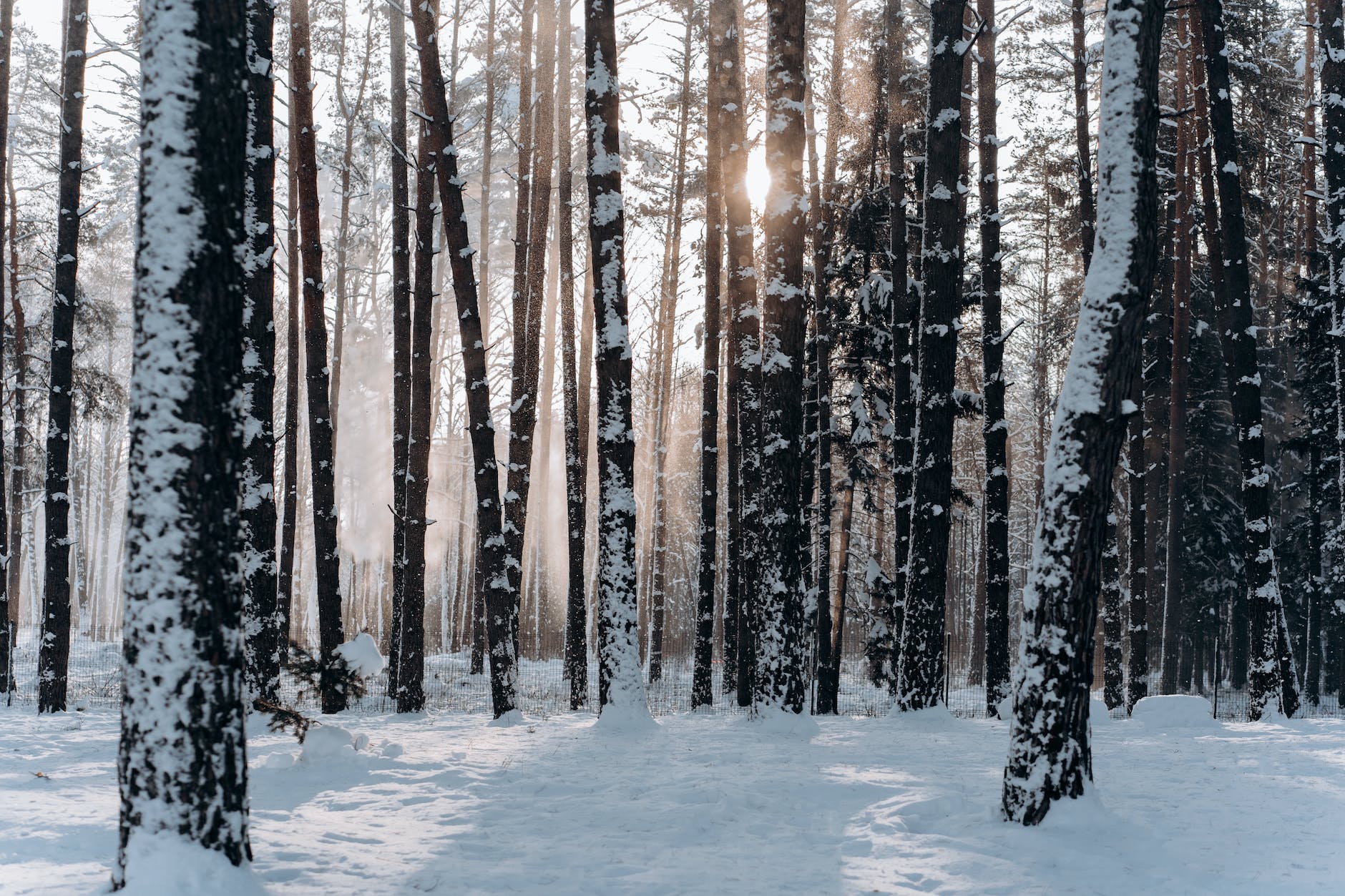
One of the most enduring symbols of the Winter Solstice is the evergreen tree – for even in the depths of the darkest, coldest months when nothing else grows, the evergreen tree stands tall and majestic, offering food, shelter, medicine, and warmth to all creatures of the forest.
While there are ancient stories of human sacrifice at the foot of the great pine trees, as well as stories of enormous bonfires with a single “yule log” that lasts for days, semblances of these ancient traditions still survive, even in our modern secular society.

“The Yule customs of the Celts are the ones most well-known to Westerners today. The Celts drew their Yule practices both from the Norse invaders and from the Druids, the priestly class of their society. The Druids venerated evergreen trees as manifestations of deity and as symbols of the universe. To the Celts, these trees were sacred because they did not ‘die’ from year to year as did deciduous trees, therefore they represented the eternal aspect of the Goddess who also never dies. Their lush greenery was symbolic of the hope for the sun’s return to green the earth once again, and their massive height associated them with eternity. Their intricate root systems which reflected this height associated them with the old magickal adage, “As Above, So Below.” This means that what is the macrocosm, or the world outside our own, is also in the microcosm, or our world, and can be made manifest by us as tools of the deities.” - pg 60 The Sabbats: A New Approach to Living the Old Ways by Edain McCoy, (c) 1996
The custom of sacrificing an evergreen tree and bringing it inside to decorate and venerate predates Christianity and is widespread from the Middle East to Scandinavia. Either way, it is a form of tree worship and ritual sacrifice that is still a living tradition for modern Westerners, Christian, Pagan, agnostic, and otherwise.
In our family, we celebrate Yule with the ritual sacrifice of a wild evergreen from the woods surrounding our property in the Colorado Rockies. We hike out in the woods on a sunny day, we choose a tree and ask its permission to be sacrificed. We make offerings of song, dance, sacred substances and herbs, smoke, and drumming. The young man who is coming of age is charged with cutting the tree, trimming it, and bringing it inside to be decorated.
Offerings of holy moon blood and sacred tobacco are placed on the wounded stump of the tree to make amends, express gratitude, and to offer nourishment and prayers for new life. These rituals maintain harmony, balance, health, and peace in our environment, for the humans, wildlife and spirits who inhabit these environs, and for all the world.
Blessed Solstice to you, dear reader!